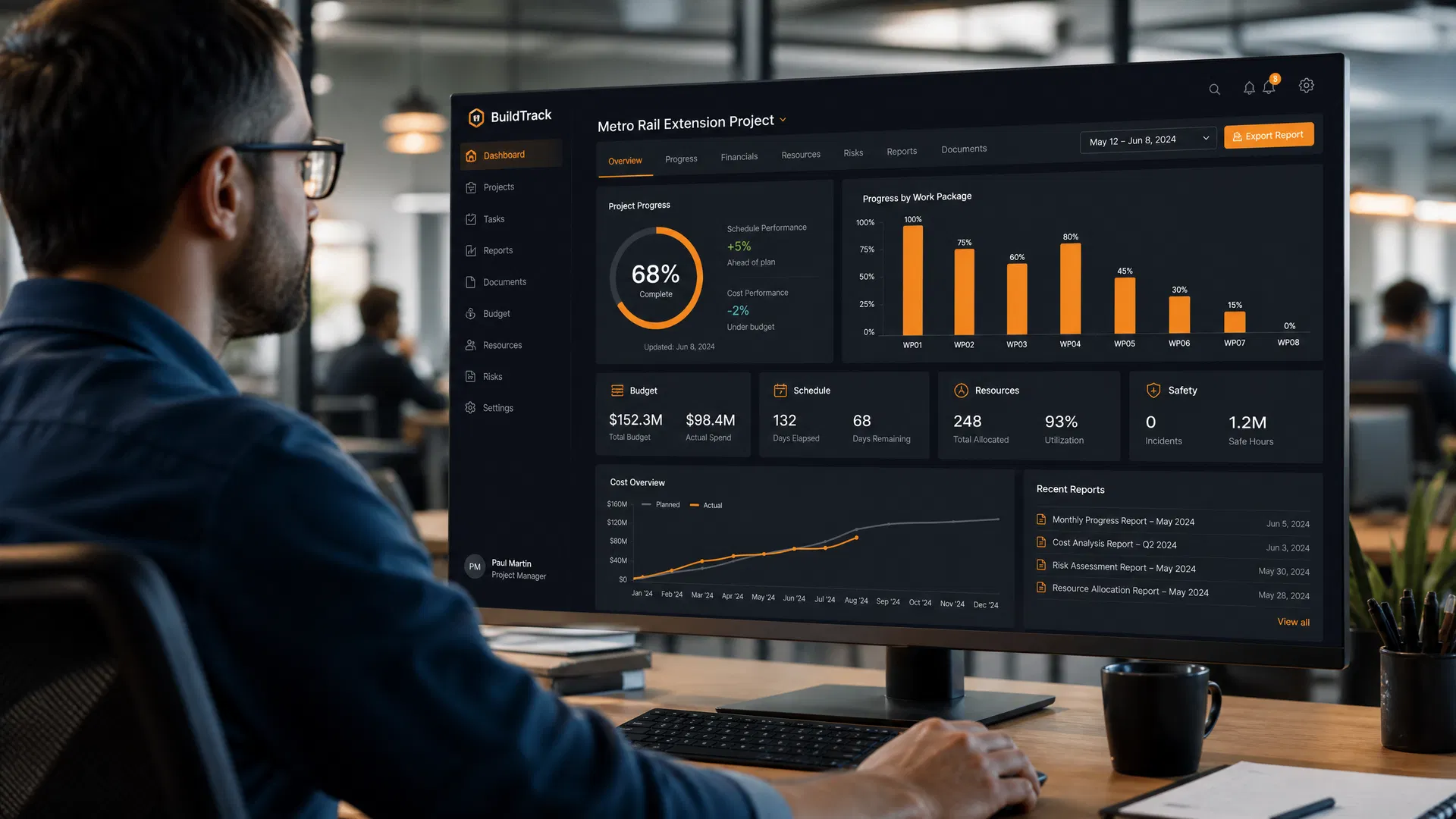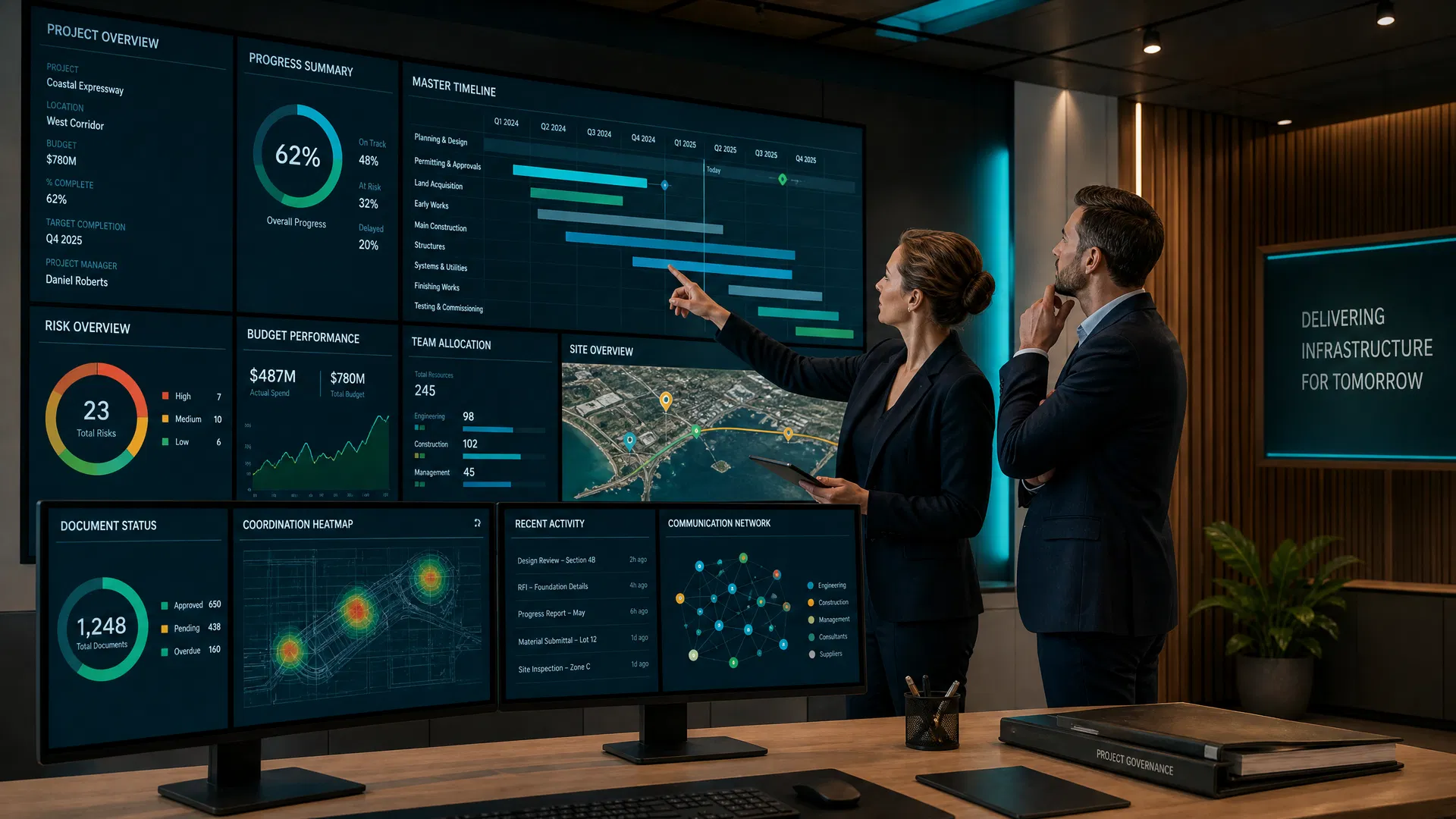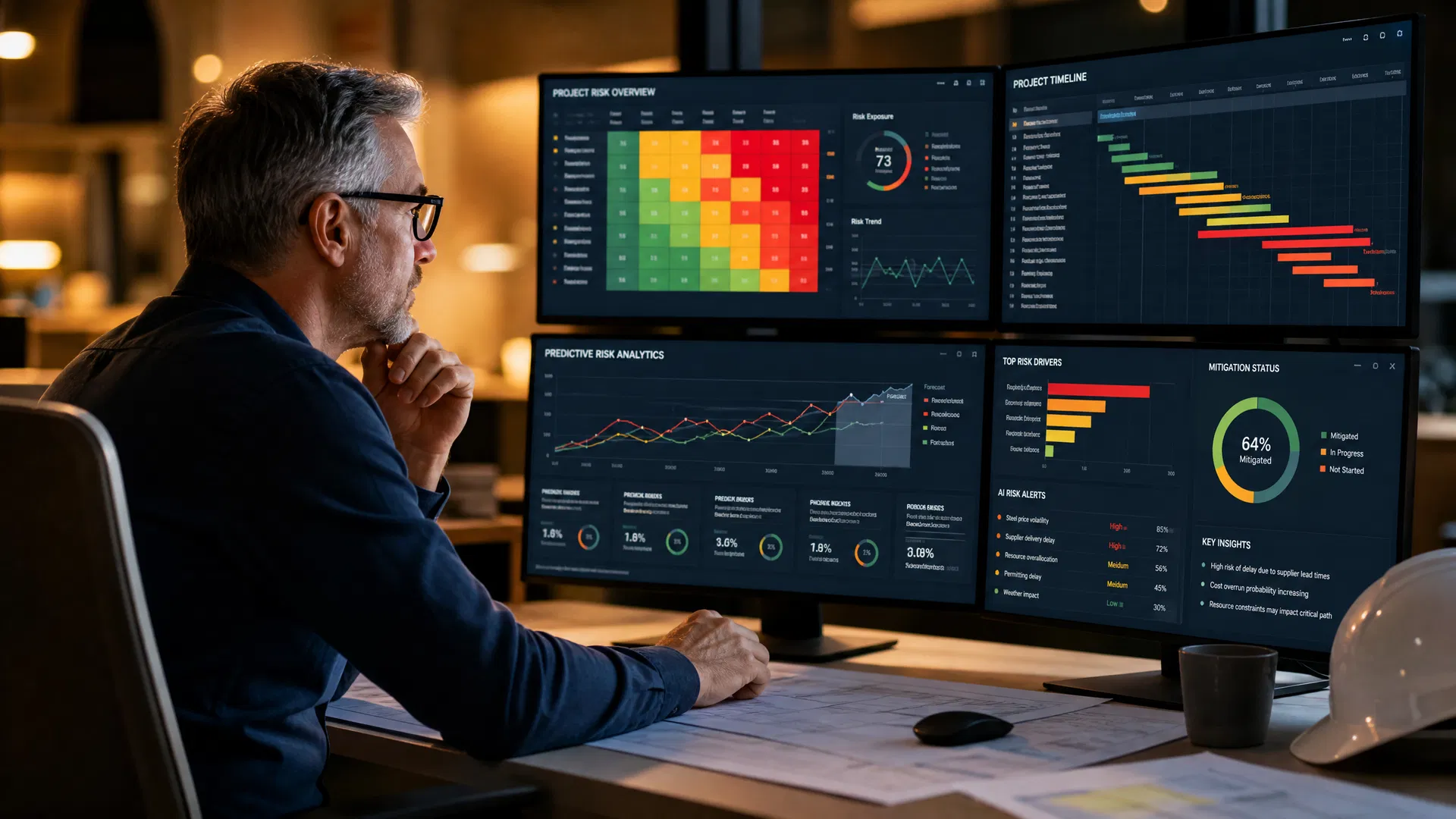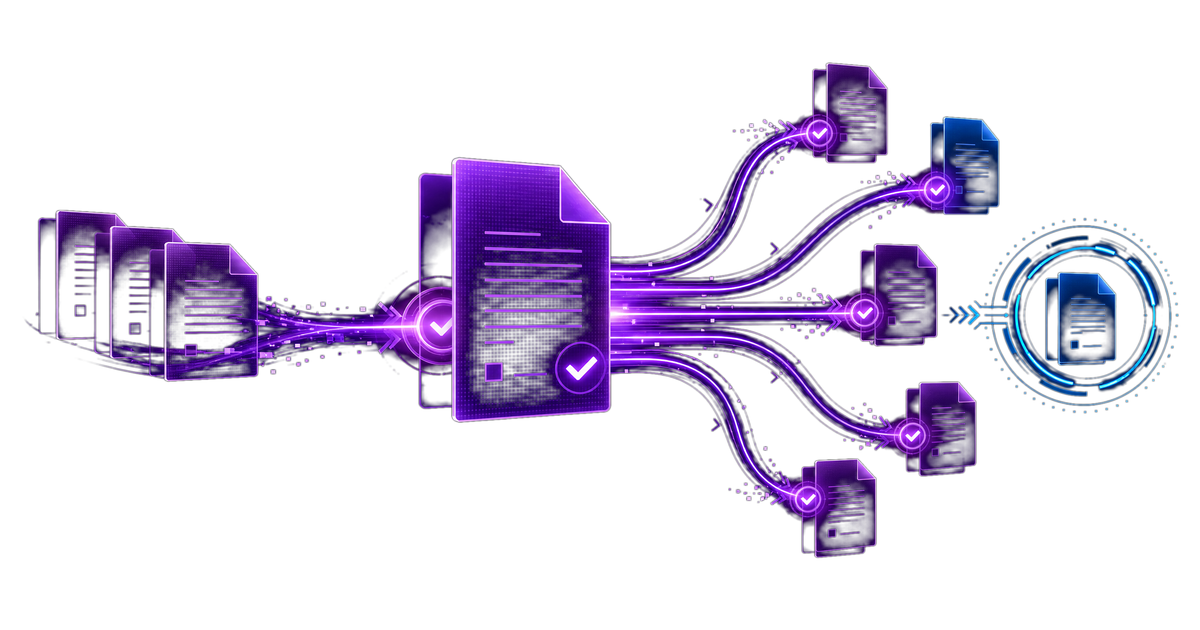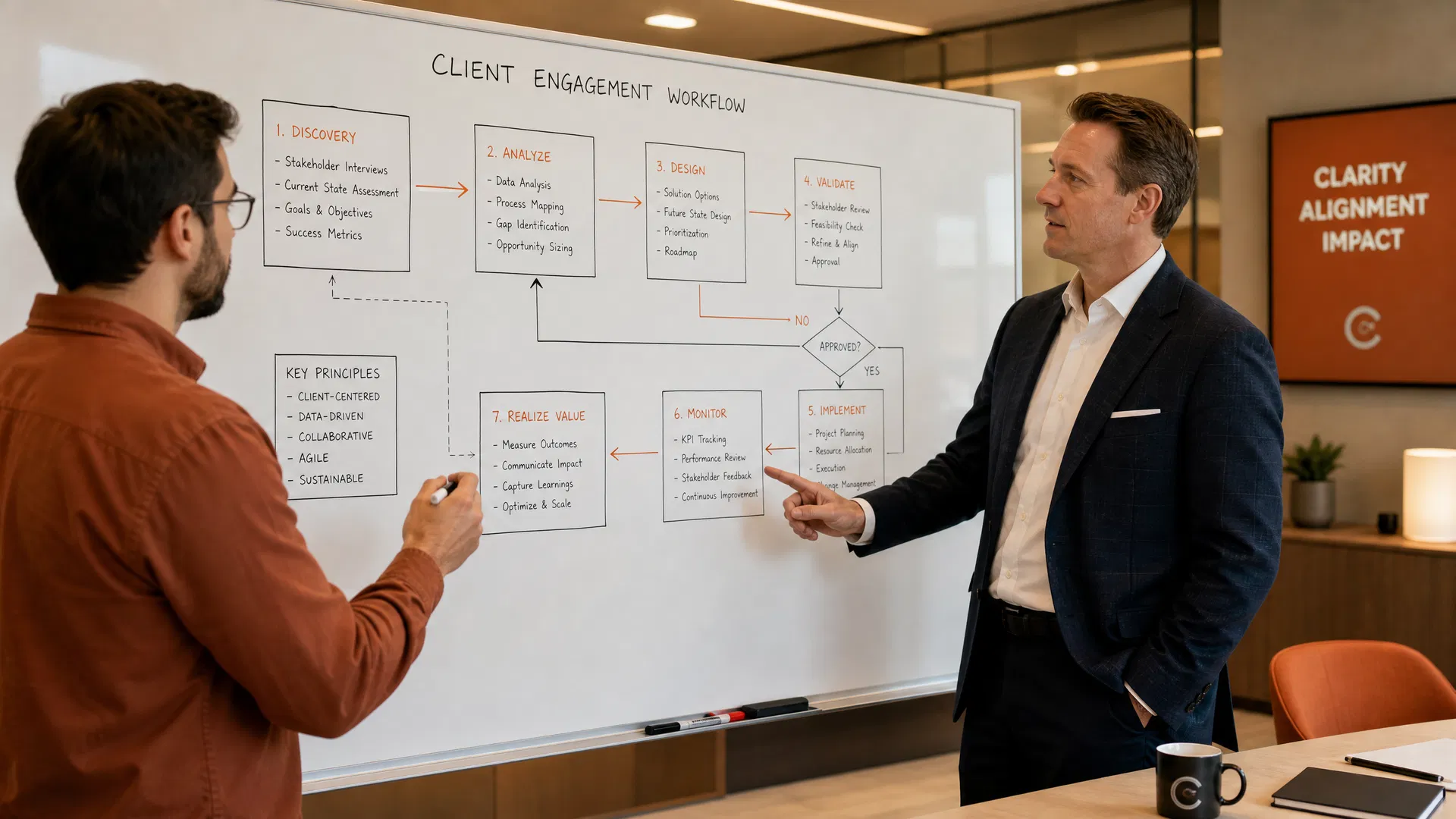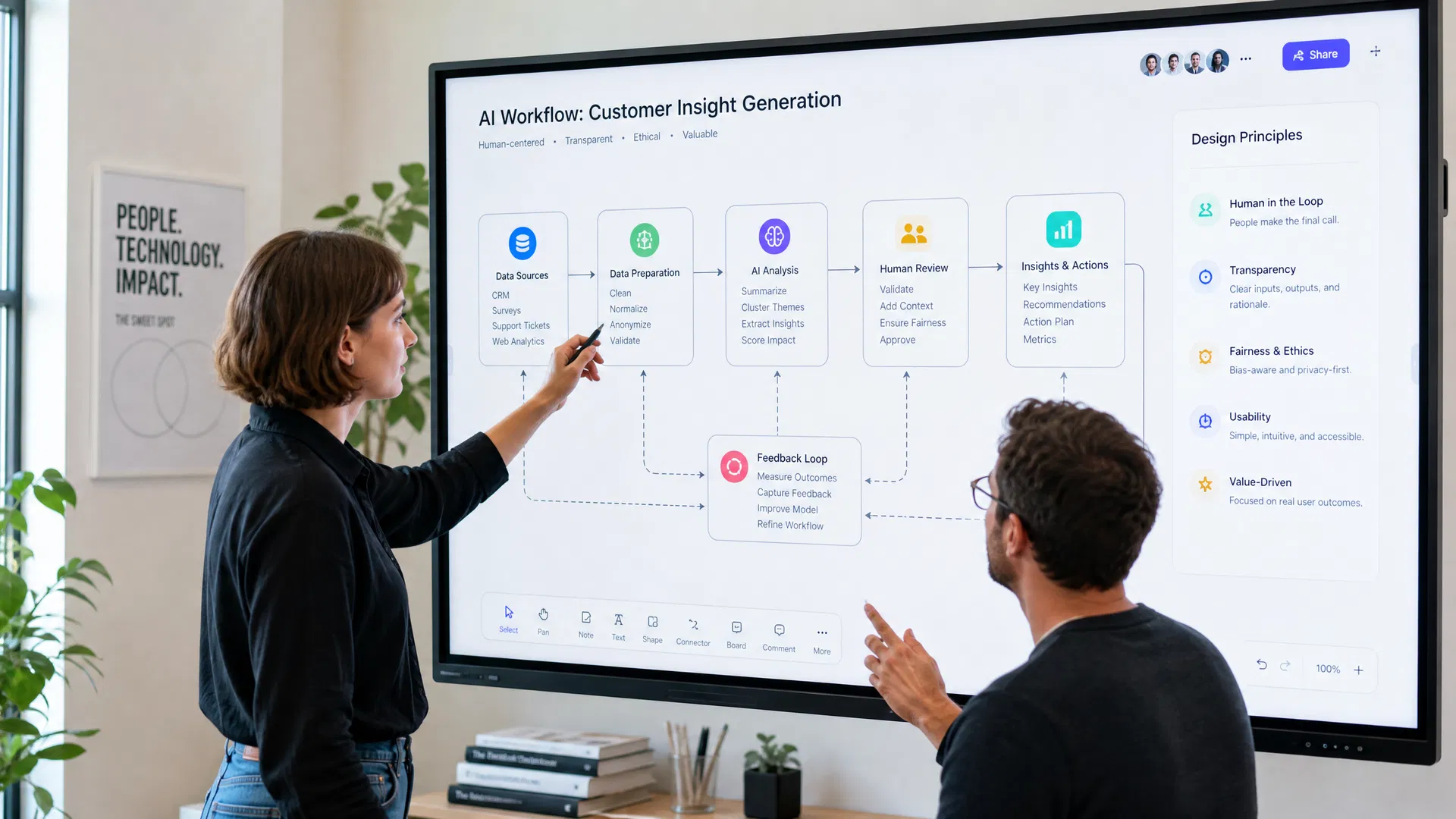
Before automating project-control reporting or forecasting, teams need a clear view of their source systems, data ownership, timing, and exception rules. This guide provides a practical readiness framework.
Practical perspective for project-based leaders navigating workflow automation, information control, and AI-enabled delivery.
Explore six strategic themes
Focused pathways for buyers; granular source tags remain managed in the CMS.
Four editorial starting points: diagnose the workflow, select the first use case, prepare the controls data, then make adoption operational.
Your reading path
0 of 4 steps explored
Step 1
Step 2
Step 3
Step 4
AI Strategy and Governance
Start hereWorkflow Automation
Start hereProject Reporting and Controls
Start hereImplementation and Adoption
Start here
Before automating project-control reporting or forecasting, teams need a clear view of their source systems, data ownership, timing, and exception rules. This guide provides a practical readiness framework.

Engineering AI pilots usually stall because the operating model around the tool is undefined. This guide explains the ownership, controls, and adoption design required for a workflow to become normal work.

A practical framework for selecting a first workflow automation opportunity that is repeatable, governed, measurable, and credible enough to earn wider adoption.

A non-client-specific operating guide to turning dispersed project signals into a governed weekly reporting and risk-escalation workflow without inventing a new source of truth.

A non-client-specific operating guide to designing a governed intake, classification, routing, and review workflow for project documents, submittals, RFIs, and correspondence.

A mid-size EPC contractor was spending 8 hours every Monday morning manually consolidating project reports. Here is exactly what changed, what it cost, and what they recovered.

RFI management is one of the most time-consuming administrative burdens in EPC project delivery. Learn how AI-powered automation can cut response time by 60% and eliminate the coordination overhead that delays projects.

Most engineering firms struggle to quantify the return on AI investments before committing. This guide provides a practical framework for calculating ROI across the five highest-impact workflow automation opportunities.

Project closeout is where construction projects bleed time and money after the physical work is done. AI-powered automation can compress weeks of administrative work into days without sacrificing quality or compliance.

EPC procurement involves hundreds of purchase orders, thousands of line items, and complex approval chains that create bottlenecks throughout project delivery. AI automation can transform this process from a source of delay into a competitive advantage.

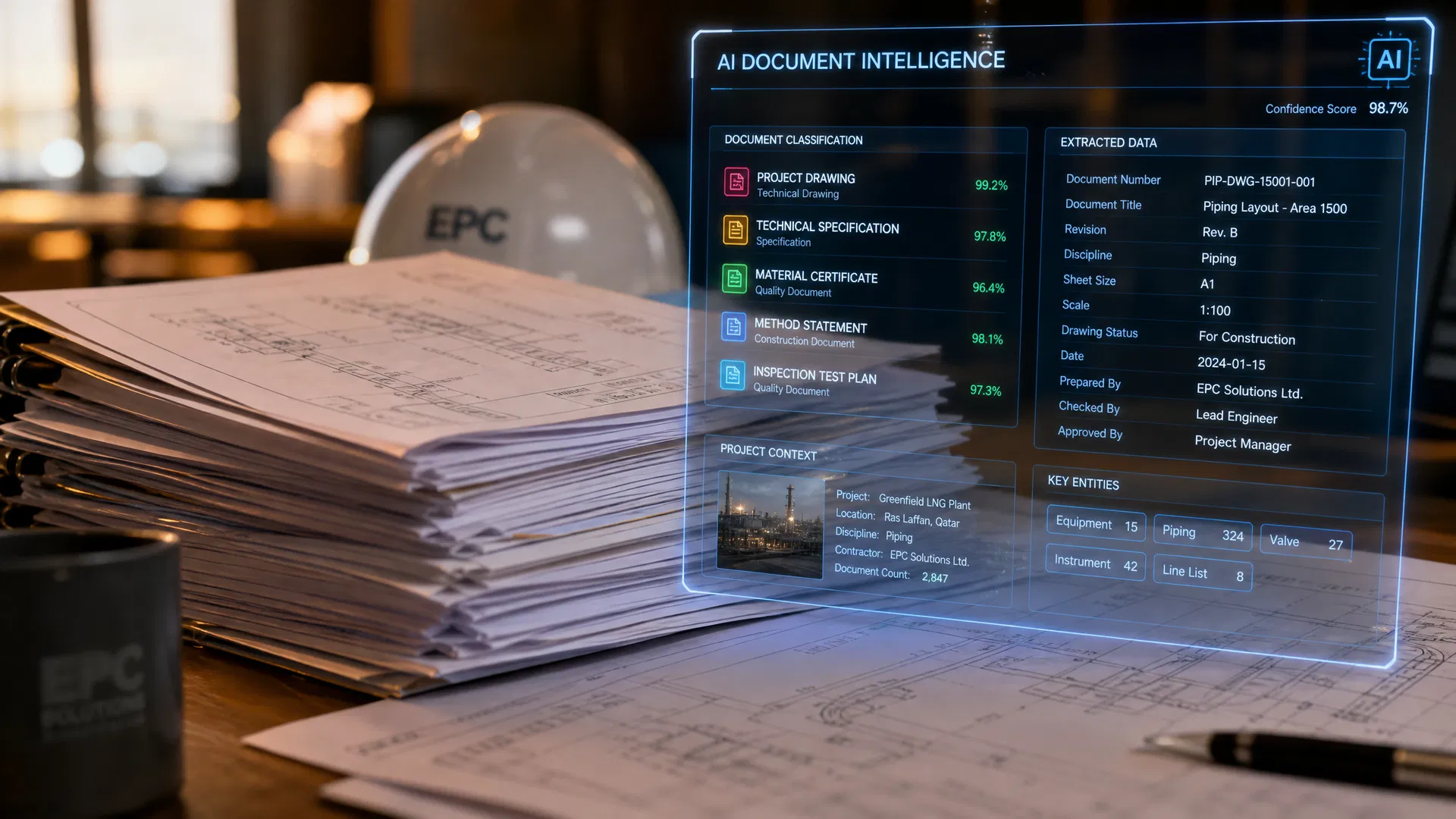
Traditional document control systems are passive repositories. AI-powered document control is an active intelligence layer that extracts meaning, surfaces insights, and prevents the information gaps that cause engineering errors and rework.

Before deploying AI in an EPC environment, your operations need to meet a minimum readiness threshold. This guide walks through the six criteria that determine whether your organisation is ready — and what to fix if it is not.

Coordination overhead — the time spent chasing updates, aligning teams, and managing information flow — is the silent budget killer in infrastructure projects. Here is how leading firms are eliminating it with AI agents.

Engineering projects fail not because risks are unknown, but because they are identified too late. AI-powered risk detection changes the timeline — surfacing issues weeks before they become crises.

The average construction project manager spends 12 hours per week on reporting. This is not a people problem — it is a process problem. Here is the systematic fix.

Change orders are inevitable in EPC projects. How you manage them determines whether they become controlled adjustments or uncontrolled cost and schedule growth. AI can transform change order management from a reactive scramble to a proactive process.

Monthly risk reports are obsolete by the time they are read. Modern infrastructure projects need real-time risk intelligence that surfaces emerging threats before they become schedule and cost impacts.

A practical, phased roadmap for mid-size engineering firms (50-500 employees) to implement AI workflow automation without disrupting ongoing project delivery or overextending limited IT resources.

Subcontractor coordination consumes 20-30% of construction project management time. AI automation can cut this overhead by 60% while improving accountability and reducing the disputes that arise from poor communication.

Most companies don't know which workflows are worth automating. A structured audit changes that — identifying high-impact opportunities before any technology is purchased.

Not all AI tools are created equal for EPC project management. This guide cuts through the hype to identify the tools that deliver genuine productivity gains in real project environments.

Handover documentation is one of the most labour-intensive phases of engineering project delivery. AI automation can cut preparation time in half while improving completeness and quality.

Data silos are the single biggest barrier to AI adoption in EPC companies. This guide explains why they exist, what they cost, and how to break them down systematically using AI integration.

As AI tools proliferate across engineering organisations, the absence of governance creates risk. This practical framework helps engineering companies implement AI governance without bureaucracy that stifles adoption.

Project reporting consumes 8-15 hours per manager per week. Here is the step-by-step path from manual spreadsheet consolidation to automated, AI-powered dashboards.

Manual workflows in EPC companies are not just inefficient — they are expensive. This analysis quantifies the true cost of manual project management workflows and makes the case for systematic automation.

EPC companies manage thousands of documents per project. Document intelligence systems turn that unstructured data into a searchable, extractable operational asset.

Manual vendor follow-ups consume project coordinators' time and introduce delays that compound across the supply chain. Here is what the data shows and how to fix it.

Most AI implementations in project-based companies fail within 12 months. The reasons are consistent — and entirely avoidable with the right approach.

The best AI workflow is one that gets used. Designing for adoption from day one — not as an afterthought — is what separates successful implementations from expensive shelf-ware.
Request a free 30-minute Workflow Review to discuss whether one of these operational ideas is relevant to your current workflow.
Request a Workflow Review ↗Join project leaders and operations managers who receive Kresto's practical perspectives on AI workflow transformation, automation, and operational excellence.
No spam. Practical insights only. Unsubscribe anytime.