AI-Powered Document Control for Engineering Projects
Editorial note: this article provides operational guidance. Examples and planning signals must be validated against your organisation’s own data, controls, and delivery context; they are not a promise of client outcomes.
Introduction
Modern engineering, procurement, and construction (EPC) projects generate millions of pages of technical documentation, specification sheets, design revisions, vendor submittals, and regulatory filings. Across an average 36-month capital infrastructure project valued at $500 million, engineering teams manage upwards of 1.2 million active documents. For decades, the industry has relied on conventional electronic document management systems (EDMS) to catalog these assets. However, conventional systems treat document control as a static version repository rather than a dynamic operational nervous system. When document control fails, the consequences cascade across the entire project lifecycle, resulting in severe schedule delays, costly rework, compliance breaches, and multi-million dollar arbitration claims.
The traditional paradigm of document control is fundamentally reactive. Engineers and document controllers spend an estimated 8 hours per week searching for superseded drawings, verifying compliance across conflicting revisions, and manually tracking how a single design change in a piping and instrumentation diagram (P&ID) affects downstream structural calculations and electrical schematics. This manual burden introduces critical vulnerabilities. Human error in cross-referencing specifications leads to mismatched equipment fabrication, while delayed notification of design changes means site teams construct assets using outdated blueprints.
Kresto Labs partners with leading engineering, infrastructure, and EPC firms in Australia, USA, Canada, UK, and India to implement next-generation AI workflow transformation solutions. By shifting document control from passive archiving to active, intelligent orchestration, our clients achieve a 40% reduction in audit preparation time and eliminate costly design-revision rework entirely. Through advanced natural language processing, semantic graph mapping, and automated change propagation engines, AI transforms document control into a proactive engine of project governance and risk mitigation.
Key Takeaways
* Beyond Versioning: Traditional EDMS tracks file iterations, whereas AI document control understands semantic context, cross-project dependencies, and regulatory intent. * Automated Change Propagation: When a primary specification changes, AI instantly identifies every affected downstream drawing, calculation, and procurement order across global engineering teams. * Semantic Findability: Engineers retrieve exact technical clauses and drawing details in seconds using natural language queries rather than navigating complex hierarchical folder structures. * Continuous Compliance Auditing: AI continuously cross-references active project documents against ISO standards, local building codes, and client specifications to flag compliance gaps before regulators intervene.
The Anatomy Of Document Control Failure In Epc Projects
To understand why traditional document control is failing complex engineering enterprises, one must examine the sheer velocity of information on a modern capital project. In a typical multidisciplinary engineering environment, a single design modification triggers ripples across structural, mechanical, electrical, and civil packages. If an architect or lead process engineer updates a pressure threshold in a mechanical specification, that change must be reflected in stress analyses, safety instrumented system (SIS) logic diagrams, procurement requisition sheets, and commissioning checklists.
In manual or legacy EDMS environments, this propagation relies entirely on human communication loops—transmittal notices, email threads, and review meetings. Studies across global megaprojects indicate that up to 18% of all project rework stems from engineers working from misaligned or unpropagated document revisions. When multidisciplinary teams operate across distributed global offices spanning Houston, London, Toronto, Sydney, and Mumbai, time zone lags and siloed repositories compound the risk. A structural engineer in Canada might approve a foundation load rating based on a mechanical drawing revision that was superseded twelve hours later by a lead engineer in London.
Furthermore, traditional keyword search functions within legacy document management platforms fail when confronted with engineering nomenclature, acronyms, and tacit industry jargon. Searching for "pressure safety valve overpressure mitigation" in a legacy system might yield thousands of irrelevant PDF hits because the tool lacks domain-specific semantic understanding. Engineers resort to hoarding local copies on shared network drives or personal desktops, creating fragmented shadow document repositories that defy institutional governance and invite severe regulatory exposure during audits.
The Artificial Intelligence Transformation
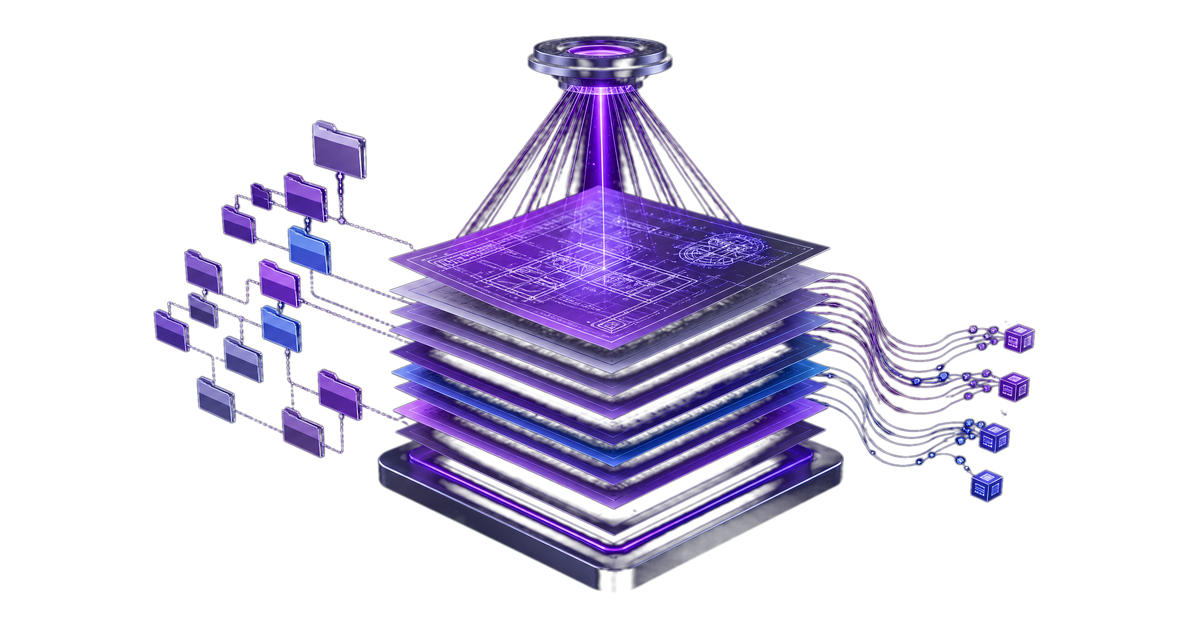
Artificial intelligence dismantles these operational bottlenecks by introducing three foundational capabilities to document control: semantic intelligence, automated change impact analysis, and continuous compliance verification. Rather than treating documents as flat PDF files or binary blobs, AI-driven document intelligence parses technical documents into structured knowledge graphs where every paragraph, table, dimension, and tag is indexed by its semantic relationship to the rest of the project.
When Kresto Labs deploys AI workflow consulting for EPC clients, we integrate large language models fine-tuned on engineering taxonomies with enterprise-grade vector databases. This architecture allows engineers to query the entire project document corpus using natural language. For instance, an engineer can ask: "Show all design basis assumptions related to seismic wind loading on pipe racks that were modified after Q2 review." The system returns precise excerpts with direct citations to the source documents, complete with revision timestamps and author credentials, reducing search and retrieval time from hours to seconds.
Moreover, AI revolutionizes change propagation. When a new vendor submittal or revised client specification is ingested into the document control ecosystem, the AI engine performs an automated diff analysis. It compares the incoming document against existing project baselines and maps every impacted downstream asset. If a valve pressure rating changes from 300 ANSI to 600 ANSI, the system automatically flags the corresponding piping isometric drawings, material requisition summaries, and stress calculation packages, generating automated review tasks for the responsible discipline leads.
Before And After Ai Transformation In Engineering Document Control
See detailed comparison table in the full analysis.
Driving Compliance And Vendor Coordination Excellence
Compliance in engineering is non-negotiable. Whether adhering to ISO 9001 quality management standards, ASME boiler and pressure vessel codes, or regional environmental regulations in Australia, the UK, North America, and India, failing to maintain traceable document control exposes firms to catastrophic legal liabilities, project stoppages, and financial penalties. Traditional document control handles compliance through periodic manual audits—a retrospective sampling method that often misses systemic non-compliance until it is too late.
AI-powered document control shifts compliance from retrospective sampling to continuous, real-time verification. By embedding compliance rule engines into the document ingestion pipeline, every incoming vendor drawing, subcontractor specification, and internal engineering deliverable is automatically screened against active regulatory standards and project contractual obligations. If a Canadian infrastructure project receives a geotechnical report lacking required seismic resilience certifications under local provincial building codes, the AI instantly halts the ingestion workflow, flags the deficiency, and drafts a formal Request for Information (RFI) to the vendor.
This seamless integration extends directly into vendor coordination, where document bottlenecks frequently choke project velocity. Vendors and fabricators submit thousands of technical deliverables that require rigorous multi-discipline review. Kresto Labs implements specialized document intelligence pipelines that automate the initial technical review of vendor submittals, verifying that all tag numbers, material grades, and dimensional tolerances match project master data. This drastically accelerates vendor turnaround times, allowing project managers to redirect skilled engineering resources from administrative document checking to high-value technical problem-solving.
Implementation Roadmap And Strategic Impact
Transitioning an enterprise-scale EPC or engineering firm from legacy document control to an AI-driven architecture requires a structured, phased implementation roadmap. Attempting to overhaul all project documentation simultaneously introduces operational friction. Instead, successful transformation begins with high-impact, high-friction domains such as vendor submittal management and as-built drawing reconciliation.
Kresto Labs employs a proven 3 weeks to implement rapid prototyping methodology for initial pilot integration, followed by enterprise-wide rollout across active project portfolios. Phase one involves data ingestion mapping and security boundary establishment, ensuring strict compliance with enterprise data governance and intellectual property protection standards. Phase two deploys semantic indexing and automated change propagation engines on a selected live project. Phase three scales the solution across the enterprise, integrating document intelligence directly with core enterprise reporting and vendor management systems.
The financial and operational return on investment is profound. Engineering firms that embrace AI-powered document control report a permanent elimination of version-mismatch rework, a 50% increase in engineering productivity, and absolute traceability across the entire project lifecycle. To explore how your organization can modernize its engineering document control and workflow architecture, connect with our team through our AI workflow consulting or document intelligence service portals.
Conclusion
Document control in modern engineering is no longer an administrative back-office chore; it is the strategic cornerstone of project execution, risk management, and regulatory compliance. As infrastructure projects grow in scale, complexity, and global distribution, legacy version-management tools are obsolete. By harnessing artificial intelligence to drive semantic search, automated change propagation, and continuous compliance auditing, forward-thinking EPC and engineering companies are transforming information friction into competitive advantage. Kresto Labs stands ready to guide your enterprise through this essential operational evolution.
Frequently Asked Questions
* Question: How does AI document control differ from traditional electronic document management systems (EDMS)? Answer: Traditional EDMS platforms operate as static file repositories that track version numbers and folder hierarchies based on manual metadata entry. In contrast, AI document control utilizes semantic natural language processing and knowledge graphs to understand the actual technical content, cross-discipline dependencies, and regulatory intent of every document. This enables instant semantic search, automated change impact analysis, and proactive compliance verification across complex project portfolios.
* Question: How long does it take to implement AI document control across an engineering enterprise? Answer: Kresto Labs utilizes a structured, phased implementation methodology that deploys initial pilot integrations within 3 weeks. Full enterprise-wide rollout across active project portfolios typically takes between 12 to 16 weeks, depending on the volume of legacy document repositories and integration complexity with existing enterprise software stacks.
* Question: Can AI document control integrate with our existing engineering software and vendor portals? Answer: Yes. Modern AI document control architectures are designed as middleware integration layers that connect seamlessly with existing enterprise document repositories, computer-aided design (CAD) software, enterprise resource planning (ERP) systems, and vendor collaboration portals via secure APIs, ensuring uninterrupted operational workflows without requiring disruptive core system replacements.
* Question: How does AI document control improve compliance and reduce audit risks for EPC projects? Answer: AI document control replaces retrospective manual auditing with continuous, automated compliance screening. As documents, vendor submittals, and specifications are ingested, AI engines instantly cross-reference them against active ISO standards, local regulatory codes, and project contractual baselines, flagging discrepancies, missing certifications, and non-compliant tolerances in real time.
* Question: What security and data privacy measures are in place when handling proprietary engineering documents? Answer: Enterprise AI deployments for engineering adhere to strict data privacy and security protocols, including tenant isolation, end-to-end encryption in transit and at rest, and zero-data-retention agreements with foundational AI model providers. Proprietary intellectual property, sensitive design specifications, and confidential project data remain strictly within the client's secure enterprise perimeter.
Frequently Asked Questions
How does AI document control differ from traditional electronic document management systems (EDMS)?
Traditional EDMS platforms operate as static file repositories that track version numbers and folder hierarchies based on manual metadata entry. In contrast, AI document control utilizes semantic natural language processing and knowledge graphs to understand the actual technical content, cross-discipline dependencies, and regulatory intent of every document. This enables instant semantic search, automated change impact analysis, and proactive compliance verification across complex project portfolios.
How long does it take to implement AI document control across an engineering enterprise?
Kresto Labs utilizes a structured, phased implementation methodology that deploys initial pilot integrations within 3 weeks. Full enterprise-wide rollout across active project portfolios typically takes between 12 to 16 weeks, depending on the volume of legacy document repositories and integration complexity with existing enterprise software stacks.
Can AI document control integrate with our existing engineering software and vendor portals?
Yes. Modern AI document control architectures are designed as middleware integration layers that connect seamlessly with existing enterprise document repositories, computer-aided design (CAD) software, enterprise resource planning (ERP) systems, and vendor collaboration portals via secure APIs, ensuring uninterrupted operational workflows without requiring disruptive core system replacements.
How does AI document control improve compliance and reduce audit risks for EPC projects?
AI document control replaces retrospective manual auditing with continuous, automated compliance screening. As documents, vendor submittals, and specifications are ingested, AI engines instantly cross-reference them against active ISO standards, local regulatory codes, and project contractual baselines, flagging discrepancies, missing certifications, and non-compliant tolerances in real time.
What security and data privacy measures are in place when handling proprietary engineering documents?
Enterprise AI deployments for engineering adhere to strict data privacy and security protocols, including tenant isolation, end-to-end encryption in transit and at rest, and zero-data-retention agreements with foundational AI model providers. Proprietary intellectual property, sensitive design specifications, and confidential project data remain strictly within the client's secure enterprise perimeter.
Kumash Shah
Principal Consultant, Kresto Consulting
Kumash Shah is a Principal Consultant at Kresto Consulting, specialising in AI workflow transformation for project-based companies. With experience across EPC, infrastructure, and engineering environments, he helps organisations identify and implement practical AI solutions that drive measurable operational improvement.
Get More Insights
Practical perspectives on AI workflow transformation, delivered to your inbox.
Start the transformation.
Run the Workflow Intelligence Assessment to discuss how these insights apply to your specific operations.
Request a Workflow Review ↗