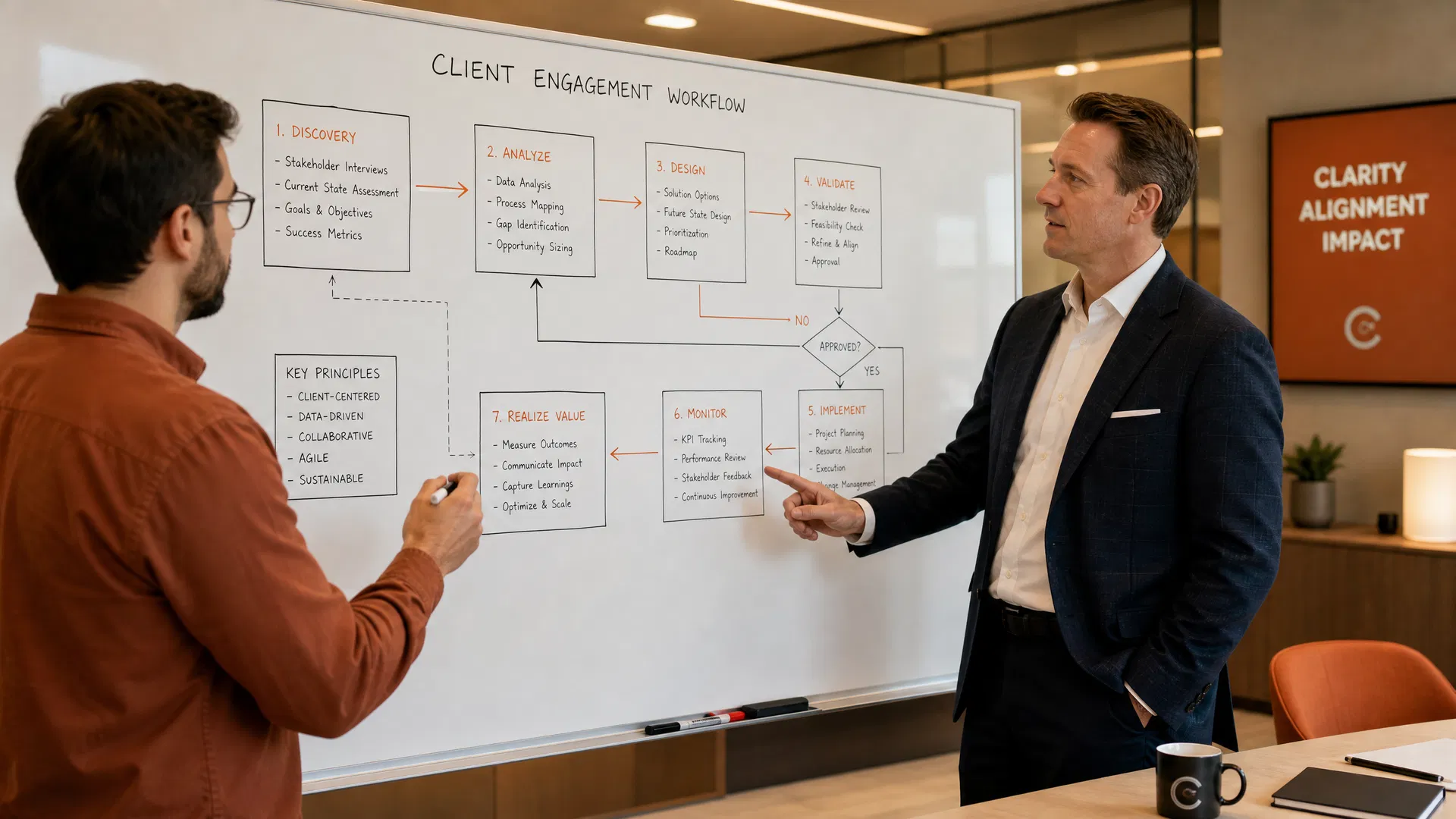
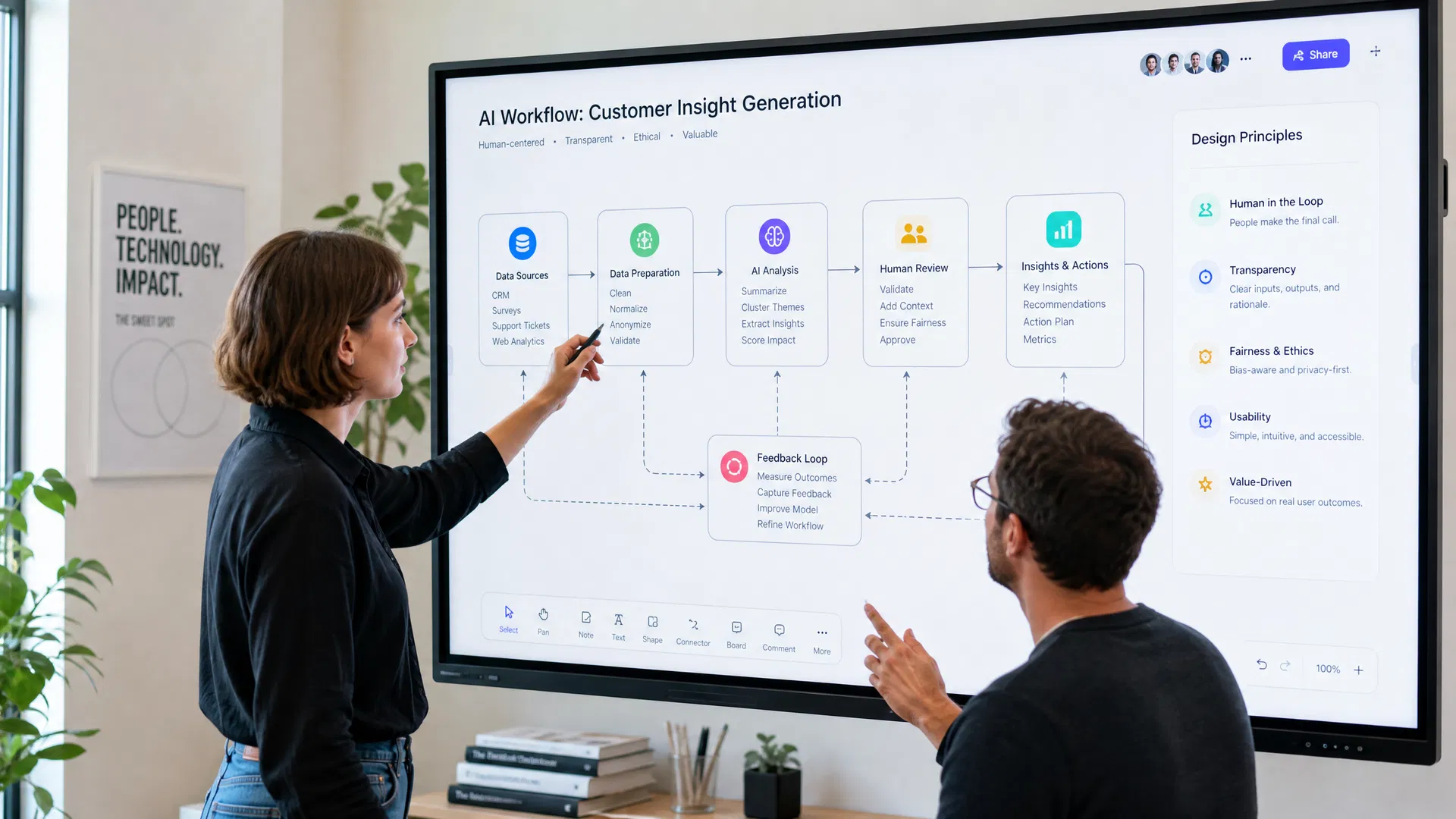
Current workflow map
Steps, systems, handoffs, manual effort, and operational bottlenecks in one readable view.
Start with a free Workflow Review. Scope the Blueprint only when the workflow warrants it.
Request a Workflow Review ↗
Most companies don't know which workflows are worth automating. They either invest in AI tools that don't solve real problems, or they miss the high-impact opportunities hiding in plain sight. Without a structured audit, teams waste time on low-impact automation while critical bottlenecks remain manual.
The introductory Workflow Review is a free 30-minute conversation about one operational bottleneck, the people involved, and the systems already in use. When a detailed investigation is justified, Kresto separately scopes a Workflow Intelligence Assessment and paid AI Workflow Blueprint around the selected workflow.
Expected outcomes are scoped against your baseline, systems, data quality, and adoption conditions before delivery—not assumed from a headline figure.
An AI Workflow Blueprint is a paid, scoped assessment output. It turns an agreed workflow investigation into a practical implementation decision—not a generic template or a promise made during an introductory call.
Illustrative sample — not a client result. The project-reporting example below shows the type of information that may be agreed within a scoped assessment.
Steps, systems, handoffs, manual effort, and operational bottlenecks in one readable view.
Automation steps, human approvals, and exception routing designed around the agreed operating process.
Candidate improvements prioritised against expected operational impact, implementation effort, readiness, and dependencies.
Required source data, integrations, access boundaries, controls, and validation dependencies.
Agreed phases, owners, milestones, measures, and review points for the scoped engagement.
Illustrative opportunity matrix
Placement depends on the client baseline, data readiness, risk, dependencies, and agreed controls. These labels are examples, not a universal ranking.
| Opportunity | Expected impact | Illustrative effort |
|---|---|---|
| Project reporting | High | Low to medium |
| Document retrieval | High | Medium to high |
| Vendor follow-up | Lower to medium | Low to medium |
We design around approved project, document, and management systems before proposing a new layer.
Rules, review points, and escalation paths are defined before a workflow is operationalised.
We establish a practical baseline so time, quality, and adoption can be reviewed honestly.
Consolidate project updates from multiple sources into automated weekly or daily reports. Establish the reporting effort baseline and target an agreed reduction.
Identify opportunities to automatically extract key data from contracts, BOQs, specifications, and technical documents, with exception review designed into the workflow.
Automate vendor communication, follow-ups, and status tracking. Reduce coordination delays and improve vendor response times.
Automatically transcribe meetings, generate summaries, extract action items, and route to responsible parties. Eliminate manual note-taking.
Build searchable knowledge bases from past projects, lessons learned, and institutional knowledge. Enable faster onboarding and decision-making.
Identify approval bottlenecks and automate routing, escalation, and compliance tracking against agreed service levels.
A free 30-minute discussion to understand the operational bottleneck, key users, current systems, and whether Kresto is a suitable next step.
If there is a fit, we agree the detailed assessment question, evidence required, relevant stakeholders, access boundaries, and intended Blueprint output.
We document the selected workflow, manual steps, source systems, handoffs, exceptions, and decision points within the agreed scope.
We assess the opportunity against practical impact, effort, data readiness, dependencies, risk, and human-review requirements.
The paid scoped Blueprint documents the proposed workflow, requirements, opportunity register, measurements, and implementation sequence.
The client decides whether to proceed, defer, or select a narrower first workflow. Implementation is never assumed from the introductory review.

A national infrastructure developer reduced document processing time by 70% and redeployed 2 full-time roles to higher-value work.
Read case study
A 180-person EPC contractor eliminated 10 hours of weekly manual reporting per project manager using AI-powered automation.
Read case studyStart with a free 30-minute conversation about the workflow, the operating constraints, and the appropriate next step.
For EPC, infrastructure, engineering, and project-based teams with a repeatable operational bottleneck.
Request a Workflow Review ↗